
StudyBuddy Pro
  • Law Study Aids
    • Case Briefs
    • Lessons
      • 1L
        • Civil Procedure
        • Constitutional Law
        • Contracts
        • Criminal Law
        • Property Law
        • Torts
      • 2L/3L
        • Business Organizations & Associations
        • Criminal Procedure
        • Evidence
        • Family Law
        • Secured Transactions
        • Wills, Trusts & Estates
    • Outlines
      • 1L
        • Civil Procedure
        • Constitutional Law
        • Contracts
        • Criminal Law
        • Property Law
        • Torts
      • 2L/3L
        • Agency
        • Business Organizations & Associations
        • Conflicts of Law
        • Corporations
        • Criminal Procedure
        • Evidence
        • Family Law
        • Intellectual Property
        • Partnerships
        • Secured Transactions
      • Exam Prep Checklists
        • Access 1L Checklists
          • Civil Procedure
          • Constitutional Law
          • Contracts
          • Criminal Law
          • Property Law
          • Torts
        • Access 2L/3L Checklists
          • Agency
          • Criminal Procedure
          • Corporations/Business Entities
          • Evidence
          • Family Law
          • Partnership
          • Trusts
          • U.C.C. ART. 9
          • Wills
    • Refresher Courses
      • 1L
        • Constitutional Law
        • Contracts Law
        • Criminal Law
        • Property Law
        • Torts Law
      • 2L/3L
        • Criminal Procedure
        • Evidence Law
    • Exam Prep Pro
      • 1L
        • Civil Procedure
        • Constitutional Law
        • Contracts
        • Criminal Law
        • Property Law
        • Torts
      • 2L/3L
        • Business Organizations & Associations
        • Conflicts of Law
        • Criminal Procedure
        • Evidence
        • Family Law
        • Secured Transactions
        • Wills, Trusts & Estates
    • Multiple Choice Quizzes
      • 1L
        • Civil Procedure
        • Constitutional Law
        • Contracts
        • Criminal Law
        • Property Law
        • Torts
      • 2L/3L
        • Business Organizations & Associations
        • Conflicts of Law
        • Criminal Procedure
        • Evidence
        • Family Law
        • Secured Transactions
        • Wills, Trusts & Estates
    • Exam Prep Workshops
      • 1L
        • Civil Procedure
        • Constitutional Law
        • Contracts
        • Criminal Law
        • Property Law
        • Torts
    • Charts and Notes
      • 1L
        • Civil Procedure
        • Constitutional Law
        • Contracts
        • Criminal Law
        • Property Law
        • Torts
      • 2L/3L
        • Criminal Procedure
        • Evidence
  • Courses
    • 1L Prep Course
  • Solutions
    • Professors and Institutions
    Generic selectors
    Exact matches only
    Search in title
    Search in content
    Post Type Selectors
    Advanced Search | Notes Search
    Start My FREE 7-DAY Trial
    Log In
    StuddyBuddy Pro
    Apple
    Facebook
    Google

    Forgot Password?

    Forgot Password?

    Forgotten Password

    Cancel

    Generic selectors
    Exact matches only
    Search in title
    Search in content
    Post Type Selectors

    • Law Study Aids
      • Case Briefs
      • Lessons
        • 1L
          • Civil Procedure
          • Constitutional Law
          • Contracts
          • Criminal Law
          • Property Law
          • Torts
        • 2L/3L
          • Business Organizations & Associations
          • Criminal Procedure
          • Evidence
          • Family Law
          • Secured Transactions
          • Wills, Trusts & Estates
      • Outlines
        • 1L
          • Civil Procedure
          • Constitutional Law
          • Contracts
          • Criminal Law
          • Property Law
          • Torts
        • 2L/3L
          • Agency
          • Business Organizations & Associations
          • Conflicts of Law
          • Corporations
          • Criminal Procedure
          • Evidence
          • Family Law
          • Intellectual Property
          • Partnerships
          • Secured Transactions
        • Exam Prep Checklists
          • Access 1L Checklists
            • Civil Procedure
            • Constitutional Law
            • Contracts
            • Criminal Law
            • Property Law
            • Torts
          • Access 2L/3L Checklists
            • Agency
            • Criminal Procedure
            • Corporations/Business Entities
            • Evidence
            • Family Law
            • Partnership
            • Trusts
            • U.C.C. ART. 9
            • Wills
      • Refresher Courses
        • 1L
          • Constitutional Law
          • Contracts Law
          • Criminal Law
          • Property Law
          • Torts Law
        • 2L/3L
          • Criminal Procedure
          • Evidence Law
      • Exam Prep Pro
        • 1L
          • Civil Procedure
          • Constitutional Law
          • Contracts
          • Criminal Law
          • Property Law
          • Torts
        • 2L/3L
          • Business Organizations & Associations
          • Conflicts of Law
          • Criminal Procedure
          • Evidence
          • Family Law
          • Secured Transactions
          • Wills, Trusts & Estates
      • Multiple Choice Quizzes
        • 1L
          • Civil Procedure
          • Constitutional Law
          • Contracts
          • Criminal Law
          • Property Law
          • Torts
        • 2L/3L
          • Business Organizations & Associations
          • Conflicts of Law
          • Criminal Procedure
          • Evidence
          • Family Law
          • Secured Transactions
          • Wills, Trusts & Estates
      • Exam Prep Workshops
        • 1L
          • Civil Procedure
          • Constitutional Law
          • Contracts
          • Criminal Law
          • Property Law
          • Torts
      • Charts and Notes
        • 1L
          • Civil Procedure
          • Constitutional Law
          • Contracts
          • Criminal Law
          • Property Law
          • Torts
        • 2L/3L
          • Criminal Procedure
          • Evidence
    • Courses
      • 1L Prep Course
    • Solutions
      • Professors and Institutions
    Start My FREE 7-DAY Trial
    Log In Sign up
    StuddyBuddy Pro
    Apple
    Facebook
    Google

    Forgot Password?

    Forgot Password?

    Forgotten Password

    Cancel
    SmartBrief enables case brief popups that define Key Terms, Doctrines, Acts, Statutes, Amendments and Treatises used in this case.

    SmartBrief

    0

    Sections to print


    To print, please Start a Free Trial or Log in.

    Confirm favorite deletion?

    Cancel Yes, Delete

    Constitutional Law Keyed to Barnett

    Barron v. City of Baltimore

    Citation:

    32 U.S. (7 Pet.) 243
    Start Your Free Trial or Log in.

    Facts

    Plaintiff John Barron owned a wharf in the city of Baltimore, Maryland. When the city of Baltimore chose to divert streams in the city, the streams deposited sand near Barron’s wharf, making the wharf too shallow for ships to dock. Barron sued, claiming that the city’s actions were a taking of private property, and under the Fifth Amendment, the city of Baltimore was required to compensate Barron for his losses.

    Only StudyBuddy Pro offers the complete Case Brief Anatomy*

    Access the most important case brief elements for optimal case understanding.

    *Case Brief Anatomy includes: Brief Prologue, Complete Case Brief, Brief Epilogue

    • The Brief Prologue provides necessary case brief introductory information and includes:
    • Topic:

      Identifies the topic of law and where this case fits within your course outline.
    • Parties:

      Identifies the cast of characters involved in the case.
    • Procedural Posture & History:

      Shares the case history with how lower courts have ruled on the matter.
    • Case Key Terms, Acts, Doctrines, etc.:

      A case specific Legal Term Dictionary.
    • Case Doctrines, Acts, Statutes, Amendments and Treatises:

      Identifies and Defines Legal Authority used in this case.
    Start Your Free Trial or Log in.
    • The Case Brief is the complete case summarized and authored in the traditional Law School I.R.A.C. format. The Pro case brief includes:
    • Brief Facts:

      A Synopsis of the Facts of the case.
    • Rule of Law:

      Identifies the Legal Principle the Court used in deciding the case.
    • Facts:

      What are the factual circumstances that gave rise to the civil or criminal case? What is the relationship of the Parties that are involved in the case.
    • Issue(s):

      Lists the Questions of Law that are raised by the Facts of the case.
    • Holding:

      Shares the Court's answer to the legal questions raised in the issue.
    • Concurring / Dissenting Opinions:

      Includes valuable concurring or dissenting opinions and their key points.
    • Reasoning and Analysis:

      Identifies the chain of argument(s) which led the judges to rule as they did.
    Start Your Free Trial or Log in.
    • The Brief Prologue closes the case brief with important forward-looking discussion and includes:
    • Policy:

      Identifies the Policy if any that has been established by the case.
    • Court Direction:

      Shares where the Court went from here for this case.
    Start Your Free Trial or Log in.

    Case Quiz

    Retake Attempts
    Question 1 of 3

    Results

    0 of 3 Questions answered correctly.

    Results

    Quiz complete. Results are being recorded.
    Q.1 - In Barron v. Mayor and City Council of Baltimore, the Supreme Court's decision hinged on the application of the Bill of Rights. Which of the following best explains the Court’s reasoning for why the Fifth Amendment's Takings Clause did not apply to state governments, in light of the historical context and constitutional interpretation at the time?
    Start Your Free Trial or Log in.
    Correct! The Court’s ruling relied on the historical context of the Bill of Rights, specifically that it was intended as a limitation on federal power rather than state authority, which reflected the early interpretation of the Constitution in the 19th century.
    Incorrect. The Court did not rely on textualism to assert the Bill of Rights applied to states but instead focused on the specific limits imposed on the federal government.
    Incorrect. The Court did not apply an incorporation theory, as the incorporation doctrine had not yet been developed.
    Incorrect. The Court did not view the Takings Clause as merely a procedural safeguard but a constitutional limitation on the federal government.
    Q.2 - Given the Court's interpretation in Barron v. Mayor and City Council of Baltimore, what constitutional principle did Chief Justice Marshall rely on to differentiate the applicability of the Bill of Rights to the federal government versus state governments, and how does this principle relate to the evolution of federalism in the 19th century?
    Start Your Free Trial or Log in.
    Incorrect. Marshall did not adopt a narrow interpretation of the statute solely to protect individual freedoms in this context.
    Incorrect. Marshall did not apply constructive incorporation, as the idea of incorporating the Bill of Rights to apply to states was not part of the constitutional framework at this time.
    Incorrect. The Court did not see the Bill of Rights as a floor for protection, but as a constraint on federal power.
    Correct! Chief Justice Marshall emphasized that the Bill of Rights was meant to limit the powers of the federal government only, thereby leaving the states free to govern property rights and other matters independently, reflecting a dual sovereignty approach.
    Q.3 - How did the decision in Barron v. Mayor and City Council of Baltimore influence the broader development of constitutional doctrine, particularly with regard to the application of the Bill of Rights to the states, and the evolution of the incorporation doctrine through the Fourteenth Amendment?
    Start Your Free Trial or Log in.
    Incorrect. The decision did not lead to immediate incorporation but reinforced the limits of federal power in relation to state laws.
    Correct! The ruling affirmed that the Bill of Rights did not apply to state governments, which led to the eventual development of the incorporation doctrine through the Fourteenth Amendment, where certain protections were applied to the states.
    Incorrect. The ruling did not lead to the immediate incorporation of the Bill of Rights; this would develop later through the Fourteenth Amendment.
    Incorrect. The Court did not focus on interstate commerce or create a rule against federal intervention in state matters based on the violation of individual rights.

    Topic Resources

    Topic Video

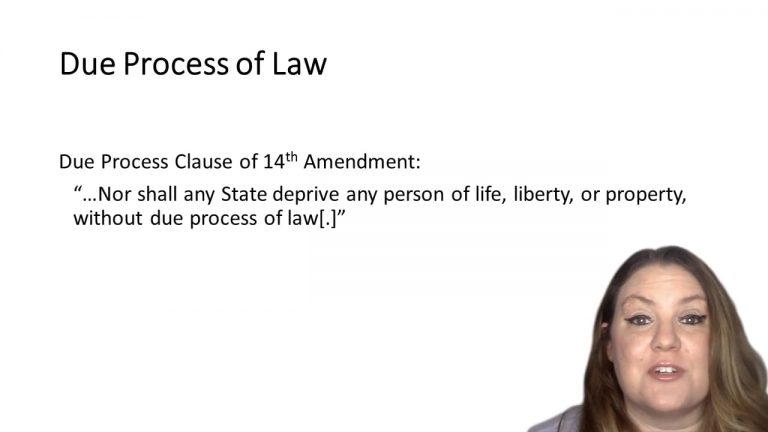
    Barron v. City of Baltimore2m 6s
    See complete Lesson, Quizzes and More

    Topic Outline

    Protections of Civil Liberties

    Topic Refresher Course

    Substantive Due Process

    Status:

    Your Law School
    Success Begins Here

    • Case Briefs - the Socratic Savior! – Best in class and Largest Library of complete I.R.A.C. / C.R.E.A.C. Law School case briefs. Includes:
      • SmartBriefs® - Enhanced case briefs for optimal clarity
      • New Case Videos - Explained and Summarized for optimal case understanding
      • CaseCast® - Professor overviews of "What you need to know"
      • New MarginBrief® - A.I. - Powered for faster, more efficient case recall
    • Lessons - Professor delivered video for topic reinforcement
    • Outlines - Professor written - downloadable, amendable and includes test-taking tips and tools
    • New Case Quiz - Reinforce case principles, instantly scored
    • Refresher Courses - Quick course reviews with interactive exercises
    • Quizzes and Exams - over 5,000 Multiple Choice and Essay questions all Professor curated and answered
    • New My Reviewer™ - Instantly receive a Score, Critique and Feedback on your legal writing
    • Exam Prep Workshops - Delivered by Professors on how to disect, organize and answer law school exam questions
    • and so much more ...
    Start your FREE Trial

    Notepad Click anywhere in notepad to add a note

    Barron v. City of Baltimore