


StudyBuddy Pro
  • Law Study Aids
    • Case Briefs
    • Lessons
      • 1L
        • Civil Procedure
        • Constitutional Law
        • Contracts
        • Criminal Law
        • Property Law
        • Torts
      • 2L/3L
        • Business Organizations & Associations
        • Criminal Procedure
        • Evidence
        • Family Law
        • Secured Transactions
        • Wills, Trusts & Estates
    • Outlines
      • 1L
        • Civil Procedure
        • Constitutional Law
        • Contracts
        • Criminal Law
        • Property Law
        • Torts
      • 2L/3L
        • Agency
        • Business Organizations & Associations
        • Conflicts of Law
        • Corporations
        • Criminal Procedure
        • Evidence
        • Family Law
        • Intellectual Property
        • Partnerships
        • Secured Transactions
      • Exam Prep Checklists
        • Access 1L Checklists
          • Civil Procedure
          • Constitutional Law
          • Contracts
          • Criminal Law
          • Property Law
          • Torts
        • Access 2L/3L Checklists
          • Agency
          • Criminal Procedure
          • Corporations/Business Entities
          • Evidence
          • Family Law
          • Partnership
          • Trusts
          • U.C.C. ART. 9
          • Wills
    • Refresher Courses
      • 1L
        • Constitutional Law
        • Contracts Law
        • Criminal Law
        • Property Law
        • Torts Law
      • 2L/3L
        • Criminal Procedure
        • Evidence Law
    • Exam Prep Pro
      • 1L
        • Civil Procedure
        • Constitutional Law
        • Contracts
        • Criminal Law
        • Property Law
        • Torts
      • 2L/3L
        • Business Organizations & Associations
        • Conflicts of Law
        • Criminal Procedure
        • Evidence
        • Family Law
        • Secured Transactions
        • Wills, Trusts & Estates
    • Multiple Choice Quizzes
      • 1L
        • Civil Procedure
        • Constitutional Law
        • Contracts
        • Criminal Law
        • Property Law
        • Torts
      • 2L/3L
        • Business Organizations & Associations
        • Conflicts of Law
        • Criminal Procedure
        • Evidence
        • Family Law
        • Secured Transactions
        • Wills, Trusts & Estates
    • Exam Prep Workshops
      • 1L
        • Civil Procedure
        • Constitutional Law
        • Contracts
        • Criminal Law
        • Property Law
        • Torts
    • Charts and Notes
      • 1L
        • Civil Procedure
        • Constitutional Law
        • Contracts
        • Criminal Law
        • Property Law
        • Torts
      • 2L/3L
        • Criminal Procedure
        • Evidence
  • Courses
    • 1L Prep Course
  • Solutions
    • Professors and Institutions
    Generic selectors
    Exact matches only
    Search in title
    Search in content
    Post Type Selectors
    Advanced Search | Notes Search
    Start My FREE 7-DAY Trial
    Log In
    StuddyBuddy Pro
    Apple
    Facebook
    Google

    Forgot Password?

    Forgot Password?

    Forgotten Password

    Cancel

    Generic selectors
    Exact matches only
    Search in title
    Search in content
    Post Type Selectors

    • Law Study Aids
      • Case Briefs
      • Lessons
        • 1L
          • Civil Procedure
          • Constitutional Law
          • Contracts
          • Criminal Law
          • Property Law
          • Torts
        • 2L/3L
          • Business Organizations & Associations
          • Criminal Procedure
          • Evidence
          • Family Law
          • Secured Transactions
          • Wills, Trusts & Estates
      • Outlines
        • 1L
          • Civil Procedure
          • Constitutional Law
          • Contracts
          • Criminal Law
          • Property Law
          • Torts
        • 2L/3L
          • Agency
          • Business Organizations & Associations
          • Conflicts of Law
          • Corporations
          • Criminal Procedure
          • Evidence
          • Family Law
          • Intellectual Property
          • Partnerships
          • Secured Transactions
        • Exam Prep Checklists
          • Access 1L Checklists
            • Civil Procedure
            • Constitutional Law
            • Contracts
            • Criminal Law
            • Property Law
            • Torts
          • Access 2L/3L Checklists
            • Agency
            • Criminal Procedure
            • Corporations/Business Entities
            • Evidence
            • Family Law
            • Partnership
            • Trusts
            • U.C.C. ART. 9
            • Wills
      • Refresher Courses
        • 1L
          • Constitutional Law
          • Contracts Law
          • Criminal Law
          • Property Law
          • Torts Law
        • 2L/3L
          • Criminal Procedure
          • Evidence Law
      • Exam Prep Pro
        • 1L
          • Civil Procedure
          • Constitutional Law
          • Contracts
          • Criminal Law
          • Property Law
          • Torts
        • 2L/3L
          • Business Organizations & Associations
          • Conflicts of Law
          • Criminal Procedure
          • Evidence
          • Family Law
          • Secured Transactions
          • Wills, Trusts & Estates
      • Multiple Choice Quizzes
        • 1L
          • Civil Procedure
          • Constitutional Law
          • Contracts
          • Criminal Law
          • Property Law
          • Torts
        • 2L/3L
          • Business Organizations & Associations
          • Conflicts of Law
          • Criminal Procedure
          • Evidence
          • Family Law
          • Secured Transactions
          • Wills, Trusts & Estates
      • Exam Prep Workshops
        • 1L
          • Civil Procedure
          • Constitutional Law
          • Contracts
          • Criminal Law
          • Property Law
          • Torts
      • Charts and Notes
        • 1L
          • Civil Procedure
          • Constitutional Law
          • Contracts
          • Criminal Law
          • Property Law
          • Torts
        • 2L/3L
          • Criminal Procedure
          • Evidence
    • Courses
      • 1L Prep Course
    • Solutions
      • Professors and Institutions
    Start My FREE 7-DAY Trial
    Log In Sign up
    StuddyBuddy Pro
    Apple
    Facebook
    Google

    Forgot Password?

    Forgot Password?

    Forgotten Password

    Cancel
    SmartBrief enables case brief popups that define Key Terms, Doctrines, Acts, Statutes, Amendments and Treatises used in this case.

    SmartBrief

    A.I Enhanced Margin Brief to quickly recall case brief A.I Enhanced Margin Brief to quickly recall case brief 0

    Sections to print


    To print, please Start a Free Trial or Log in.

    Confirm favorite deletion?

    Cancel Yes, Delete

    Torts keyed to Robertson

    View this case in different Casebooks
    Torts Keyed to EpsteinTorts Keyed to ProsserTorts Keyed to DuncanTorts Keyed to MillerTorts Keyed to Underwood

    Pearson v. Dodd

    Citation:

    United States Court of Appeals, District of Columbia, 1969. 410 F.2d 701.

    Start Your Free Trial or Log in.

    Facts

    On multiple occasions, two former employees of the Plaintiff, U.S. Senator Thomas Dodd, entered the Plaintiff’s office without authority and removed numerous documents from his files without the Plaintiff’s knowledge. The former employees made copies of the documents, replaced the originals, and turned over the copies to one of the Defendants, Jack Anderson, who was aware of how the copies were made and obtained. Anderson, along with the second Defendant, Drew Pearson then published articles containing information taken from these documents.

    Only StudyBuddy Pro offers the complete Case Brief Anatomy*

    Access the most important case brief elements for optimal case understanding.

    *Case Brief Anatomy includes: Brief Prologue, Complete Case Brief, Brief Epilogue

    • The Brief Prologue provides necessary case brief introductory information and includes:
    • Topic:

      Identifies the topic of law and where this case fits within your course outline.
    • Parties:

      Identifies the cast of characters involved in the case.
    • Procedural Posture & History:

      Shares the case history with how lower courts have ruled on the matter.
    • Case Key Terms, Acts, Doctrines, etc.:

      A case specific Legal Term Dictionary.
    • Case Doctrines, Acts, Statutes, Amendments and Treatises:

      Identifies and Defines Legal Authority used in this case.
    Start Your Free Trial or Log in.
    • The Case Brief is the complete case summarized and authored in the traditional Law School I.R.A.C. format. The Pro case brief includes:
    • Brief Facts:

      A Synopsis of the Facts of the case.
    • Rule of Law:

      Identifies the Legal Principle the Court used in deciding the case.
    • Facts:

      What are the factual circumstances that gave rise to the civil or criminal case? What is the relationship of the Parties that are involved in the case.
    • Issue(s):

      Lists the Questions of Law that are raised by the Facts of the case.
    • Holding:

      Shares the Court's answer to the legal questions raised in the issue.
    • Concurring / Dissenting Opinions:

      Includes valuable concurring or dissenting opinions and their key points.
    • Reasoning and Analysis:

      Identifies the chain of argument(s) which led the judges to rule as they did.
    Start Your Free Trial or Log in.
    • The Brief Prologue closes the case brief with important forward-looking discussion and includes:
    • Policy:

      Identifies the Policy if any that has been established by the case.
    • Court Direction:

      Shares where the Court went from here for this case.
    Start Your Free Trial or Log in.

    Case Quiz

    Retake Attempts
    Question 1 of 3

    Results

    0 of 3 Questions answered correctly.

    Results

    Quiz complete. Results are being recorded.
    Q.1 - Doctrinally reconstructed from the appellate opinion, which of the following best states the implicit limiting principle the court adopts for conversion when a defendant exploits information derived from another’s documents?
    Start Your Free Trial or Log in.
    Correct! The appellate court’s reasoning presupposes that conversion targets interferences that approximate a transfer of exclusive dominion—i.e., where the owner’s practical control over the chattel is meaningfully curtailed. Because Dodd’s documents remained fully usable and available to him, the nonrivalrous copying did not reach that functional threshold.
    Incorrect. This is wrong: The court explicitly refuses to treat any inconsistency with the owner’s wishes as sufficient without serious impairment of possessory interests.
    Incorrect. This is wrong: The defendant’s benefit from information, standing alone, is treated as irrelevant to conversion absent impairment of the plaintiff’s control over the physical papers.
    Incorrect. This is wrong: The opinion does not ground conversion in the wrongfulness of access per se, but in the effect of the interference on the tangible chattel.
    Q.2 - Reading Pearson v. Dodd together with the Restatement (Second) of Torts § 222A, which option best captures the court’s allocation of doctrinal space between conversion and intrusion-like privacy torts given the same underlying conduct?
    Start Your Free Trial or Log in.
    Incorrect. This is wrong: The court does not collapse the doctrines but separates them by reversing on conversion while allowing the privacy claim to continue.
    Incorrect. This is wrong: Conversion is not described as the catch-all for informational invasions, and privacy torts are not restricted to reputational harms.
    Correct! The court cabins conversion to “serious interference” with tangible possessory interests and deliberately redirects the harm of clandestine access to the privacy realm, as evidenced by affirming the denial of summary judgment on the intrusion-type claim. This doctrinal allocation preserves conversion as a property tort while acknowledging that the morally troubling conduct lies in secret access, not dispossession.
    Incorrect. This is wrong: The court explicitly allows an intrusion claim to proceed even in the absence of conversion, contradicting the notion of subordination.
    Q.3 - Which of the following most accurately characterizes the court’s treatment of secondary or derivative liability for conversion in light of Pearson’s use of the copied materials?
    Start Your Free Trial or Log in.
    Incorrect. This is wrong: The appellate court overturns the district court’s move that treated Pearson like a recipient of stolen goods, expressly refusing to equate receipt of copies with receipt of the chattel.
    Incorrect. This is wrong: No strict liability is imposed on all downstream beneficiaries of information; the opinion focuses on the status of the original documents, not the chain of informational exploitation.
    Incorrect. This is wrong: The court does not condition conversion on Pearson’s editorial encouragement alone; its analysis turns on the absence of substantial deprivation of the originals.
    Correct! By rejecting conversion liability based merely on Pearson’s receipt and use of copied materials, the court implicitly narrows derivative conversion to scenarios where a defendant interferes with the tangible chattel itself, such as receiving or retaining the original. This maintains a conceptual difference between participation in dispossession and mere exploitation of duplicated content.

    MarginBrief™ Case overview for optimal recall

    A.I Enhanced Margin Brief to quickly recall case brief
    A.I Enhanced Margin Brief to quickly recall case brief

    Generating...

    Facts:

    Quickly review the Facts of this case including its key ideas for optimal understanding and recall.

    Quickly review the Facts of this case including its key ideas for optimal understanding and recall.

    Issue:

    Utilize our powerful A.I. tools to easily capture and understand the Issue in this case.

    Utilize our powerful A.I. tools to easily capture and understand the Issue in this case.

    Rule:

    Easily understand the Rule in this case so you have a complete and thorough appreciation for overall case concepts completely tying together what occurred, the court’s questions and the case outcome.

    Easily understand the Rule in this case so you have a complete and thorough appreciation for overall case concepts completely tying together what occurred, the court’s questions and the case outcome.

    Start Your Free Trial or Log in.

    Topic Resources

    ™ CaseCast

    Melissa A. Hale

    ProfessorMelissa A. Hale

    CaseCast™ "What you need to know"

    CaseCast™ –  "What you need to know"

    play_circle_filled
    pause_circle_filled
    Pearson v. Dodd
    volume_down
    volume_up
    volume_off
    To continue listening to this CaseCast™ please Subscribe

    Topic Video

    Pearson v. Dodd2m 30s
    See complete Lesson, Quizzes and More

    Topic Outline

    Intentional Torts

    Topic Refresher Course

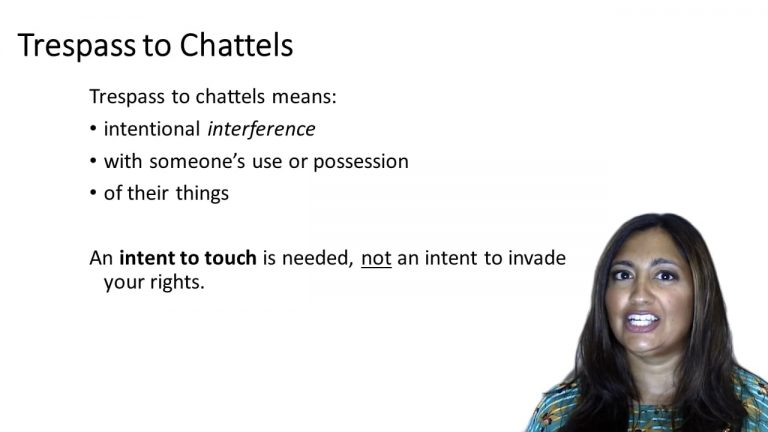
    Trespass to Chattels and Conversion

    Status:

    Your Law School
    Success Begins Here

    • Case Briefs - the Socratic Savior! – Best in class and Largest Library of complete I.R.A.C. / C.R.E.A.C. Law School case briefs. Includes:
      • SmartBriefs® - Enhanced case briefs for optimal clarity
      • New Case Videos - Explained and Summarized for optimal case understanding
      • CaseCast® - Professor overviews of "What you need to know"
      • New MarginBrief® - A.I. - Powered for faster, more efficient case recall
    • Lessons - Professor delivered video for topic reinforcement
    • Outlines - Professor written - downloadable, amendable and includes test-taking tips and tools
    • New Case Quiz - Reinforce case principles, instantly scored
    • Refresher Courses - Quick course reviews with interactive exercises
    • Quizzes and Exams - over 5,000 Multiple Choice and Essay questions all Professor curated and answered
    • New My Reviewer™ - Instantly receive a Score, Critique and Feedback on your legal writing
    • Exam Prep Workshops - Delivered by Professors on how to disect, organize and answer law school exam questions
    • and so much more ...
    Start your FREE Trial

    Notepad Click anywhere in notepad to add a note

    Pearson v. Dodd