
StudyBuddy Pro
  • Law Study Aids
    • Case Briefs
    • Lessons
      • 1L
        • Civil Procedure
        • Constitutional Law
        • Contracts
        • Criminal Law
        • Property Law
        • Torts
      • 2L/3L
        • Business Organizations & Associations
        • Criminal Procedure
        • Evidence
        • Family Law
        • Secured Transactions
        • Wills, Trusts & Estates
    • Outlines
      • 1L
        • Civil Procedure
        • Constitutional Law
        • Contracts
        • Criminal Law
        • Property Law
        • Torts
      • 2L/3L
        • Agency
        • Business Organizations & Associations
        • Conflicts of Law
        • Corporations
        • Criminal Procedure
        • Evidence
        • Family Law
        • Intellectual Property
        • Partnerships
        • Secured Transactions
      • Exam Prep Checklists
        • Access 1L Checklists
          • Civil Procedure
          • Constitutional Law
          • Contracts
          • Criminal Law
          • Property Law
          • Torts
        • Access 2L/3L Checklists
          • Agency
          • Criminal Procedure
          • Corporations/Business Entities
          • Evidence
          • Family Law
          • Partnership
          • Trusts
          • U.C.C. ART. 9
          • Wills
    • Refresher Courses
      • 1L
        • Constitutional Law
        • Contracts Law
        • Criminal Law
        • Property Law
        • Torts Law
      • 2L/3L
        • Criminal Procedure
        • Evidence Law
    • Exam Prep Pro
      • 1L
        • Civil Procedure
        • Constitutional Law
        • Contracts
        • Criminal Law
        • Property Law
        • Torts
      • 2L/3L
        • Business Organizations & Associations
        • Conflicts of Law
        • Criminal Procedure
        • Evidence
        • Family Law
        • Secured Transactions
        • Wills, Trusts & Estates
    • Multiple Choice Quizzes
      • 1L
        • Civil Procedure
        • Constitutional Law
        • Contracts
        • Criminal Law
        • Property Law
        • Torts
      • 2L/3L
        • Business Organizations & Associations
        • Conflicts of Law
        • Criminal Procedure
        • Evidence
        • Family Law
        • Secured Transactions
        • Wills, Trusts & Estates
    • Exam Prep Workshops
      • 1L
        • Civil Procedure
        • Constitutional Law
        • Contracts
        • Criminal Law
        • Property Law
        • Torts
    • Charts and Notes
      • 1L
        • Civil Procedure
        • Constitutional Law
        • Contracts
        • Criminal Law
        • Property Law
        • Torts
      • 2L/3L
        • Criminal Procedure
        • Evidence
  • Courses
    • 1L Prep Course
  • Solutions
    • Professors and Institutions
    Generic selectors
    Exact matches only
    Search in title
    Search in content
    Post Type Selectors
    Advanced Search | Notes Search
    Start My FREE 7-DAY Trial
    Log In
    StuddyBuddy Pro
    Apple
    Facebook
    Google

    Forgot Password?

    Forgot Password?

    Forgotten Password

    Cancel

    Generic selectors
    Exact matches only
    Search in title
    Search in content
    Post Type Selectors

    • Law Study Aids
      • Case Briefs
      • Lessons
        • 1L
          • Civil Procedure
          • Constitutional Law
          • Contracts
          • Criminal Law
          • Property Law
          • Torts
        • 2L/3L
          • Business Organizations & Associations
          • Criminal Procedure
          • Evidence
          • Family Law
          • Secured Transactions
          • Wills, Trusts & Estates
      • Outlines
        • 1L
          • Civil Procedure
          • Constitutional Law
          • Contracts
          • Criminal Law
          • Property Law
          • Torts
        • 2L/3L
          • Agency
          • Business Organizations & Associations
          • Conflicts of Law
          • Corporations
          • Criminal Procedure
          • Evidence
          • Family Law
          • Intellectual Property
          • Partnerships
          • Secured Transactions
        • Exam Prep Checklists
          • Access 1L Checklists
            • Civil Procedure
            • Constitutional Law
            • Contracts
            • Criminal Law
            • Property Law
            • Torts
          • Access 2L/3L Checklists
            • Agency
            • Criminal Procedure
            • Corporations/Business Entities
            • Evidence
            • Family Law
            • Partnership
            • Trusts
            • U.C.C. ART. 9
            • Wills
      • Refresher Courses
        • 1L
          • Constitutional Law
          • Contracts Law
          • Criminal Law
          • Property Law
          • Torts Law
        • 2L/3L
          • Criminal Procedure
          • Evidence Law
      • Exam Prep Pro
        • 1L
          • Civil Procedure
          • Constitutional Law
          • Contracts
          • Criminal Law
          • Property Law
          • Torts
        • 2L/3L
          • Business Organizations & Associations
          • Conflicts of Law
          • Criminal Procedure
          • Evidence
          • Family Law
          • Secured Transactions
          • Wills, Trusts & Estates
      • Multiple Choice Quizzes
        • 1L
          • Civil Procedure
          • Constitutional Law
          • Contracts
          • Criminal Law
          • Property Law
          • Torts
        • 2L/3L
          • Business Organizations & Associations
          • Conflicts of Law
          • Criminal Procedure
          • Evidence
          • Family Law
          • Secured Transactions
          • Wills, Trusts & Estates
      • Exam Prep Workshops
        • 1L
          • Civil Procedure
          • Constitutional Law
          • Contracts
          • Criminal Law
          • Property Law
          • Torts
      • Charts and Notes
        • 1L
          • Civil Procedure
          • Constitutional Law
          • Contracts
          • Criminal Law
          • Property Law
          • Torts
        • 2L/3L
          • Criminal Procedure
          • Evidence
    • Courses
      • 1L Prep Course
    • Solutions
      • Professors and Institutions
    Start My FREE 7-DAY Trial
    Log In Sign up
    StuddyBuddy Pro
    Apple
    Facebook
    Google

    Forgot Password?

    Forgot Password?

    Forgotten Password

    Cancel
    SmartBrief enables case brief popups that define Key Terms, Doctrines, Acts, Statutes, Amendments and Treatises used in this case.

    SmartBrief

    A.I Enhanced Margin Brief to quickly recall case brief A.I Enhanced Margin Brief to quickly recall case brief 0

    Sections to print


    To print, please Start a Free Trial or Log in.

    Confirm favorite deletion?

    Cancel Yes, Delete

    Torts Keyed to Twerski

    View this case in different Casebooks
    Torts Keyed to EpsteinTorts Keyed to Miller

    Intel Corp. v. Hamidi

    Citation:

    71 P.3d 296 (Cal. 2003)

    Start Your Free Trial or Log in.

    Facts

    Intel Corp. (Plaintiff) sued FACE-Intel and Hamidi (Defendants), former employees sending mass emails through Plaintiff’s internal internet and computer system criticizing Plaintiff’s employment policies. Plaintiff argued a claim for trespass to chattels and sought an injunction against any further emails being sent.

    Only StudyBuddy Pro offers the complete Case Brief Anatomy*

    Access the most important case brief elements for optimal case understanding.

    *Case Brief Anatomy includes: Brief Prologue, Complete Case Brief, Brief Epilogue

    • The Brief Prologue provides necessary case brief introductory information and includes:
    • Topic:

      Identifies the topic of law and where this case fits within your course outline.
    • Parties:

      Identifies the cast of characters involved in the case.
    • Procedural Posture & History:

      Shares the case history with how lower courts have ruled on the matter.
    • Case Key Terms, Acts, Doctrines, etc.:

      A case specific Legal Term Dictionary.
    • Case Doctrines, Acts, Statutes, Amendments and Treatises:

      Identifies and Defines Legal Authority used in this case.
    Start Your Free Trial or Log in.
    • The Case Brief is the complete case summarized and authored in the traditional Law School I.R.A.C. format. The Pro case brief includes:
    • Brief Facts:

      A Synopsis of the Facts of the case.
    • Rule of Law:

      Identifies the Legal Principle the Court used in deciding the case.
    • Facts:

      What are the factual circumstances that gave rise to the civil or criminal case? What is the relationship of the Parties that are involved in the case.
    • Issue(s):

      Lists the Questions of Law that are raised by the Facts of the case.
    • Holding:

      Shares the Court's answer to the legal questions raised in the issue.
    • Concurring / Dissenting Opinions:

      Includes valuable concurring or dissenting opinions and their key points.
    • Reasoning and Analysis:

      Identifies the chain of argument(s) which led the judges to rule as they did.
    Start Your Free Trial or Log in.
    • The Brief Prologue closes the case brief with important forward-looking discussion and includes:
    • Policy:

      Identifies the Policy if any that has been established by the case.
    • Court Direction:

      Shares where the Court went from here for this case.
    Start Your Free Trial or Log in.

    Case Quiz

    Retake Attempts
    Question 1 of 3

    Results

    0 of 3 Questions answered correctly.

    Results

    Quiz complete. Results are being recorded.
    Q.1 - How does the majority’s holding in Intel Corp. v. Hamidi reflect a deviation from the historical elasticity of trespass to chattels doctrine, particularly in the transition from tangible to intangible property contexts?
    Start Your Free Trial or Log in.
    Incorrect. A is incorrect because the court explicitly declined to treat non-physical communication as functionally equivalent to physical invasions.
    Correct! The majority held that actionable trespass to chattels requires proof of actual system impairment or diminished capacity, rejecting the idea that unauthorized but non-disruptive digital access—such as Hamidi’s emails—was enough. This marked a doctrinal retrenchment from more flexible historical uses of the tort in the face of emerging technologies.
    Incorrect. C is incorrect because the court rejected foreseeability as a basis for liability in absence of concrete harm.
    Incorrect. D is incorrect because the court rejected nominal harm as sufficient, contradicting early English doctrine.
    Q.2 - Which legal interpretation best captures the theoretical structure underlying Justice Brown’s dissent in Hamidi, particularly regarding the right to exclude and the nature of digital autonomy?
    Start Your Free Trial or Log in.
    Correct! Justice Brown's dissent hinges on the concept that trespass is fundamentally about the right to exclude—her position affirms that unauthorized access, even without quantifiable harm, invades a protected possessory interest in the digital realm. This view foregrounds a rights-based property framework over a harm-based tort model.
    Incorrect. B is incorrect because speech protections were not treated as overriding tort claims categorically.
    Incorrect. C is incorrect because Intel is not a state actor and thus cannot be converted into a public forum.
    Incorrect. D is incorrect because the dissent did not advocate for subjective harm alone, but a rights violation grounded in autonomy and control.
    Q.3 - If the court in Hamidi had accepted Intel’s position that resource use and employee distraction constituted trespass, what latent doctrinal risk would most likely emerge in broader tort jurisprudence?
    Start Your Free Trial or Log in.
    Incorrect. A is incorrect because Intel’s claim was rooted in intentional tort, not negligence.
    Incorrect. B is incorrect because nuisance requires non-possessory interference with land use, which was not at issue here.
    Correct! Accepting Intel’s argument would risk transforming critical or dissenting speech—especially that directed at organizational structures—into actionable tortious conduct, thereby blurring the line between digital communication and economic interference. This shift could chill legitimate speech and permit tort remedies for reputational annoyance alone.
    Incorrect. D is incorrect because Intel did not assert sovereign or privacy-like identity rights; its argument was grounded in functional disruption.

    MarginBrief™ Case overview for optimal recall

    A.I Enhanced Margin Brief to quickly recall case brief
    A.I Enhanced Margin Brief to quickly recall case brief

    Generating...

    Facts:

    Quickly review the Facts of this case including its key ideas for optimal understanding and recall.

    Quickly review the Facts of this case including its key ideas for optimal understanding and recall.

    Issue:

    Utilize our powerful A.I. tools to easily capture and understand the Issue in this case.

    Utilize our powerful A.I. tools to easily capture and understand the Issue in this case.

    Rule:

    Easily understand the Rule in this case so you have a complete and thorough appreciation for overall case concepts completely tying together what occurred, the court’s questions and the case outcome.

    Easily understand the Rule in this case so you have a complete and thorough appreciation for overall case concepts completely tying together what occurred, the court’s questions and the case outcome.

    Start Your Free Trial or Log in.

    Topic Resources

    ™ CaseCast

    Melissa A. Hale

    ProfessorMelissa A. Hale

    CaseCast™ "What you need to know"

    CaseCast™ –  "What you need to know"

    play_circle_filled
    pause_circle_filled
    Intel Corp. v. Hamidi
    volume_down
    volume_up
    volume_off
    To continue listening to this CaseCast™ please Subscribe

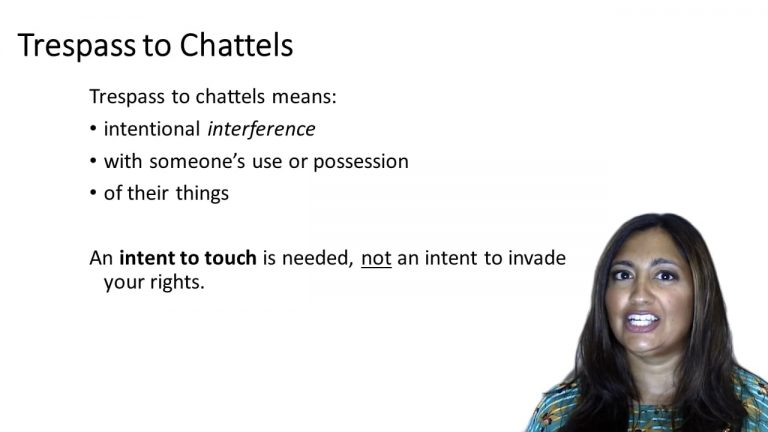
    Topic Video

    Intel Corp. v. Hamidi2m 30s
    See complete Lesson, Quizzes and More

    Topic Outline

    Intentional Torts

    Topic Refresher Course

    Trespass to Chattels and Conversion

    Status:

    Your Law School
    Success Begins Here

    • Case Briefs - the Socratic Savior! – Best in class and Largest Library of complete I.R.A.C. / C.R.E.A.C. Law School case briefs. Includes:
      • SmartBriefs® - Enhanced case briefs for optimal clarity
      • New Case Videos - Explained and Summarized for optimal case understanding
      • CaseCast® - Professor overviews of "What you need to know"
      • New MarginBrief® - A.I. - Powered for faster, more efficient case recall
    • Lessons - Professor delivered video for topic reinforcement
    • Outlines - Professor written - downloadable, amendable and includes test-taking tips and tools
    • New Case Quiz - Reinforce case principles, instantly scored
    • Refresher Courses - Quick course reviews with interactive exercises
    • Quizzes and Exams - over 5,000 Multiple Choice and Essay questions all Professor curated and answered
    • New My Reviewer™ - Instantly receive a Score, Critique and Feedback on your legal writing
    • Exam Prep Workshops - Delivered by Professors on how to disect, organize and answer law school exam questions
    • and so much more ...
    Start your FREE Trial

    Notepad Click anywhere in notepad to add a note

    Intel Corp. v. Hamidi